










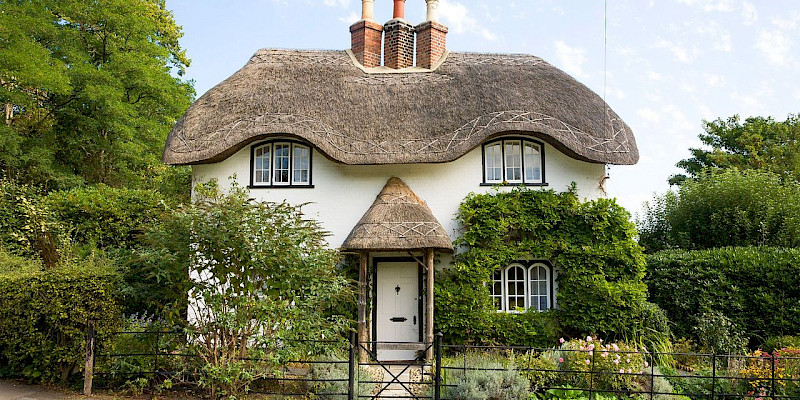



Oxfordshire has more thatched properties than almost anywhere else in England. Drive through Blewbury, Long Wittenham, East Hagbourne, Harwell or virtually any of the villages within a few miles of Didcot and you will pass timber-framed cottages with thick straw or water reed roofs, many of them several hundred years old. Long Wittenham alone has a number of picturesque timber-framed and thatched cottages, with Cruck Cottage believed to date from the 13th century, making it one of the oldest houses in South Oxfordshire. Blewbury has thatched and half-timbered properties throughout the village, with Hall Barn said to date back to around 1660.
For buyers who fall in love with one of these properties, the first question that tends to follow is whether getting a mortgage on it is actually possible. The short answer is yes, in most cases. But it works differently to buying a standard modern house, and knowing what to expect before you make an offer saves a lot of stress later.
Why thatched properties are treated differently by lenders
Thatched roofs fall into the category of non-standard construction, which means they sit outside the norm in how they are built. Lenders therefore see them as carrying more risk, since more could go wrong that might affect the value of the property in the future.
The main concerns lenders have are fire risk, maintenance costs and, where applicable, listed building status. Thatched roofs are notably more susceptible to fire risks than standard roofs, which can be due to lightning strikes, sparks from chimneys, electrical faults or external sources. If a fire starts, it tends to spread quickly due to the nature of the materials involved.
Thatched roofs also need periodic costly maintenance, including a full roof replacement roughly every 30 years, which lenders factor into their assessment. For buyers planning to live in the property long term, these costs need to be factored into financial planning from the start.
None of this means thatched properties are unmortgageable. Most thatched cottages can be mortgaged, and a sound, well-maintained roof is acceptable to a fair range of lenders, though a high listing grade or obvious fire risk pushes you towards specialist lenders.
The listing question
Many thatched cottages in Oxfordshire are also listed buildings, which adds another layer of complexity. If a property is both thatched and listed, it can be more difficult to finance, due to restrictive covenants requiring specialist tradespeople and limiting renovations, and the specific listing grade matters: Grade I listed buildings are harder to finance than Grade II* and Grade II.
Most of the thatched cottages you will encounter in the villages around Didcot are Grade II listed, which is the most common designation and the most straightforward to mortgage. Grade I and Grade II* listings are rarer and do require more specialist lenders. If you are not sure of a property's listing status, Historic England's National Heritage List for England is publicly searchable and will tell you.
What lenders look at
When a lender considers a thatched property, they will typically require a more detailed survey than on a standard house. The surveyor will assess the condition of the thatch itself, the structure of the roof beneath it, the chimneys, any wood-burning stoves, and the overall condition of what is often a very old building. The three things that tend to decide a thatched cottage mortgage are the age and condition of the thatch, who will insure it, and whether the chimney and any stove are set up safely.
This brings us to insurance, which is often the part that catches buyers out. Standard home insurance policies do not cover thatched properties. You will need a specialist thatch insurance policy, and lenders will insist on seeing this before they will proceed. Lenders will expect fire safety precautions such as spark arrestors and smoke alarms, and will insist that you use a specialist insurance provider. Getting insurance quotes early is advisable, as it can delay or derail a mortgage if left too late.
Deposits and loan to value
It is common for the maximum loan to value lenders offer for a thatched cottage to be lower than for other homes, given the higher upkeep costs. In practice this means some lenders will require a larger deposit than they would for a standard property. The exact amount varies between lenders and depends on the condition of the property, its listing status and the insurance position. It is not a reason to rule out a purchase, but it is worth knowing early so your deposit expectations are realistic.
Does this apply to part-thatched properties?
A part-thatched home, or one where only an outbuilding is thatched, is usually easier to mortgage because the fire and insurance exposure is smaller. Some properties in the Oxfordshire villages have thatched outbuildings or garages alongside a conventionally roofed main house. These tend to cause fewer complications, though lenders will still want to be satisfied on the insurance point.
The local picture
For buyers looking at villages around Didcot, thatched properties come up regularly on the market in Blewbury, Long Wittenham, East Hagbourne, Harwell, Sutton Courtenay and East Hendred among others. They are genuinely characterful homes and for the right buyer in the right financial position they can be a wonderful purchase. The key is going in with clear eyes about the mortgage process and sorting the insurance and survey questions early rather than after an offer has been accepted.
Getting advice from a broker who is familiar with non-standard construction before you make an offer, rather than after, is particularly important with thatched properties. It means you know which lenders are likely to be receptive, what deposit you will need, and what the insurance requirements are going to look like, before you are committed.
If you are looking at a thatched cottage in Oxfordshire and want to understand your mortgage options, we are happy to talk it through.
Frequently Asked Questions
Yes, in most cases. Thatched properties are classed as non-standard construction, which means fewer lenders will consider them compared to a standard house, but it does not make them unmortgageable. A property with a well-maintained roof, appropriate fire safety measures and specialist thatch insurance in place is acceptable to a reasonable number of lenders. Properties that are also listed, particularly at Grade I or Grade II*, require more specialist lenders but are still financeable. The key is working with a broker who knows which lenders are comfortable with thatched properties rather than applying to mainstream lenders who may simply decline.