












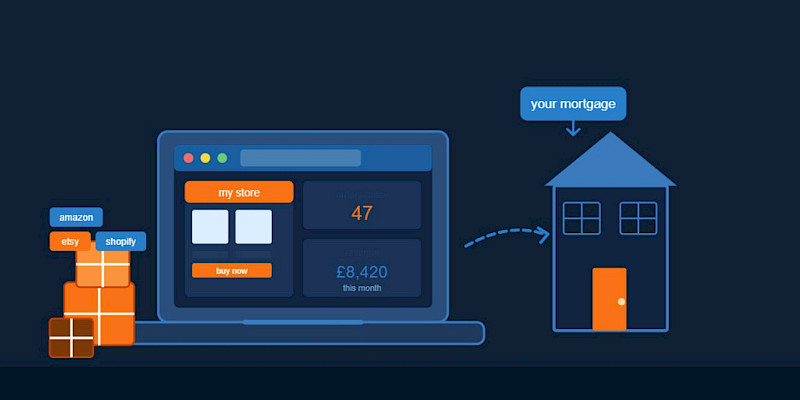



The number of people running ecommerce businesses in the UK has grown enormously over the past few years. Amazon FBA sellers, Etsy shop owners, Shopify store founders, eBay traders, TikTok Shop sellers a significant and growing slice of the working population now earns some or all of their income from selling online.
If that is you, and you are thinking about buying a home, the question of whether your income will be taken seriously by a mortgage lender is a fair one. Online business income is real income, but it does not always look the way lenders are most used to seeing it, and that can create friction if you go about the process without understanding what to expect.
The short answer is yes, you can get a mortgage as an ecommerce seller. How much you can borrow and which lenders are right for your situation depends on how your business is set up and how you document your income. Here is what you actually need to know.
I should say upfront that I run an ecommerce business alongside this mortgage brokerage, so when a seller comes to me I am not encountering this type of income for the first time. I understand the shape of it the difference between gross revenue and what actually lands in your pocket, the seasonal swings, the way accounts can look on paper versus how the business actually performs. That context matters when it comes to making the right case to a lender.
What lenders actually look at
The first thing to understand is that lenders do not care about your revenue. They care about your profit. Your gross sales figure, whether that is your Etsy turnover, your Amazon Seller Central total or your Shopify revenue dashboard, is not what a mortgage lender uses. What matters is your net profit after all business costs have been deducted. Platform fees, cost of goods, advertising spend, packaging, postage, storage, software subscriptions, returns all of it comes off before a lender starts their calculation.
For a lot of ecommerce sellers this means the income figure a lender works with is considerably smaller than the revenue number they are used to quoting. A Shopify store turning over £200,000 might have a net profit of £50,000 or £60,000 after costs. That is the number that drives the mortgage calculation.
Sole trader or limited company: it makes a difference
How your income is assessed depends heavily on how your business is structured.
If you operate as a sole trader, lenders will typically look at your net profit as declared on your Self Assessment tax return, evidenced through your SA302s and Tax Year Overviews from HMRC. Most lenders want two years of figures. Where they need to pick a single income number, many will average the two years or use the lower of the two. If your business has grown significantly, this can understate your current earning position, and some lenders handle this more sympathetically than others.
If you operate through a limited company, the assessment varies more between lenders. Some will only count salary plus dividends actually drawn. Others will also consider retained profit sitting in the company. The gap between these two approaches can be very large. A director of an ecommerce business who pays herself a low salary for tax efficiency and leaves profit in the company could look very different to two different lenders even with identical underlying figures. One might offer £180,000, another £340,000, from exactly the same set of accounts. Knowing which lender reads your accounts most favourably is where a broker who understands this kind of business genuinely earns their keep.
The seasonal income problem
Most ecommerce businesses have seasonal patterns. Amazon sellers see a spike in Q4 around Black Friday and Christmas. Etsy sellers often peak around Mother's Day, Valentine's Day and the run-up to Christmas. A Shopify store selling gardening products might do most of its revenue in spring. These patterns mean monthly bank statements can look inconsistent even when the annual picture is healthy.
Some lenders view month-to-month variation as a red flag. Others, with more experience of self-employed and ecommerce applicants, understand it as a normal feature of trading and assess the annual figures rather than fixating on quieter months. Getting your application to the right lender matters more than it would for someone with a flat monthly salary.
Tax efficiency and the mortgage gap
A lot of ecommerce sellers structure their finances intelligently to minimise tax. Legitimate business expenses are claimed, salary is kept at the personal allowance threshold, profits are left in the company or drawn as dividends at a favourable rate. This is entirely sensible tax planning, but it creates a gap between what your finances look like to HMRC and what your actual day to day financial position is.
Lenders assess the income you declare, not the income you feel like you earn. If your declared profit is lower than your business actually generates because of how it is structured, that is worth understanding before you apply. There is sometimes a conversation worth having with both your accountant and your mortgage broker about the trade-off between tax efficiency now and mortgage affordability in the near term, particularly if you are planning to buy within the next year or two.
What documents you will need
For most ecommerce mortgage applications you should expect to need: your SA302s and Tax Year Overviews for the last two years from your HMRC account; two years of company accounts if you operate as a limited company; three months of personal bank statements; three months of business bank statements. Having these ready before you make any offers on a property makes the process much smoother and avoids delays at a point when time matters.
A note on newer businesses
If you have been selling online for less than two years, getting a mortgage is harder but not impossible. Some lenders will consider one year of accounts in the right circumstances, particularly if you have a strong employment history in a related field before going self-employed. If you have only recently started your ecommerce business and are hoping to buy soon, it is worth having a realistic conversation about your options now rather than making assumptions.
The bigger picture
Getting a mortgage as an ecommerce seller is not fundamentally different from getting one as any other self-employed person. The specific challenges seasonal income, the revenue versus profit gap, how different lenders treat limited company income are all manageable with the right preparation and the right lender. What tends to go wrong is when sellers apply to mainstream lenders without specialist guidance and find their income assessed in a way that does not reflect how the business actually works.
If you run an online business and you are thinking about buying a home in Didcot or anywhere in Oxfordshire, we are happy to have a conversation. This is a world I know from the inside.
Frequently Asked Questions
Yes. Income from ecommerce businesses including Amazon, Etsy, Shopify and eBay is treated as self-employed income for mortgage purposes. Lenders will want to see it evidenced through your HMRC Self Assessment records, specifically your SA302s and Tax Year Overviews, usually covering the last two years. If you operate through a limited company, your company accounts will also be required. The amount you can borrow depends on your declared profit, your business structure, your deposit size and your overall financial circumstances. Working with a broker who has experience of ecommerce income is worth doing, as lenders vary significantly in how they assess this type of business.